
Sulphur's Repricing, and What It Means for BHCP
Sulphur's Comeback
When investors think about the Broken Hill Cobalt Project (BHCP), cobalt quite rightly takes centre stage. But there's another commodity sitting within the same mineralisation that is increasingly difficult to ignore — and right now, its market dynamics are moving in BHCP's favour.
Sulphur, traditionally treated as a minor by-product credit in project economics, is undergoing a meaningful repricing driven by supply shocks, energy transition demand, and structural market tightening. For BHCP, with its ~7.5% sulphur grade, that shift has the potential to materially enhance project economics — elevating sulphur from a footnote to a value stream worth watching in its own right.
A Market That Has Moved
Sulphur prices have strengthened materially over the past 12–18 months — and recent events in the Middle East suggest elevated prices are likely to persist for several quarters to come.
Benchmark contract prices for early 2026 are sitting in the range of US$475–520/t, up from around US$300/t in late 2025. Asian spot markets are reporting even higher levels, in the range of US$570–680/t. In some regions, year-on-year price increases have exceeded 100%.
To put that in context: prior financial modelling for BHCP has typically assumed a sulphur price of approximately US$150/t. The gap between that assumption and today's market is substantial.

What's Driving the Shift
Sulphur demand has traditionally been anchored by phosphate fertiliser production — a stable, long-duration demand base. But a structural layer is being added on top of that.
The energy transition is consuming sulphuric acid at scale. High-pressure acid leach (HPAL) operations, nickel and cobalt refining, and the broader battery metals processing chain all require substantial acid inputs — and sulphur is the feedstock. The same commodity transition that supports cobalt demand is, in turn, supporting sulphur demand.
On the supply side, responsiveness is structurally limited. Sulphur is predominantly a by-product of oil and gas refining, meaning production volumes are tied to hydrocarbon throughput rather than commodity price signals. Supply is also geographically concentrated, with the Gulf region accounting for a significant share of global exports. Disruptions linked to the Iran conflict and Strait of Hormuz shipping constraints have added further tightness to an already constrained market.
A significant new development emerged in mid-April, with China announcing it will halt sulphuric acid exports from May. According to Jefferies, China's sulphuric acid capacity accounts for approximately 40% of global supply, a potential supply shock that, if sustained, would materially reshape the global market.
Why This Is Relevant to BHCP
BHCP hosts its cobalt resource within sulphur-rich mineralisation. At ~7.5% sulphur, the project carries meaningful leverage to sulphur pricing — more so than many comparable assets.
At current price levels, sulphur transitions from a minor line item to a potentially material contributor to project economics. Higher sulphur revenues reduce effective operating costs, improve project resilience, and support a broader range of development and processing scenarios.
Critically, the structural drivers underpinning this repricing do not appear transitory. Fertiliser demand continues to grow in emerging markets. Battery metals processing capacity is expanding. Supply growth remains constrained by its by-product nature. The conditions driving sulphur to multi-year highs reflect a market in transition — not a temporary spike.
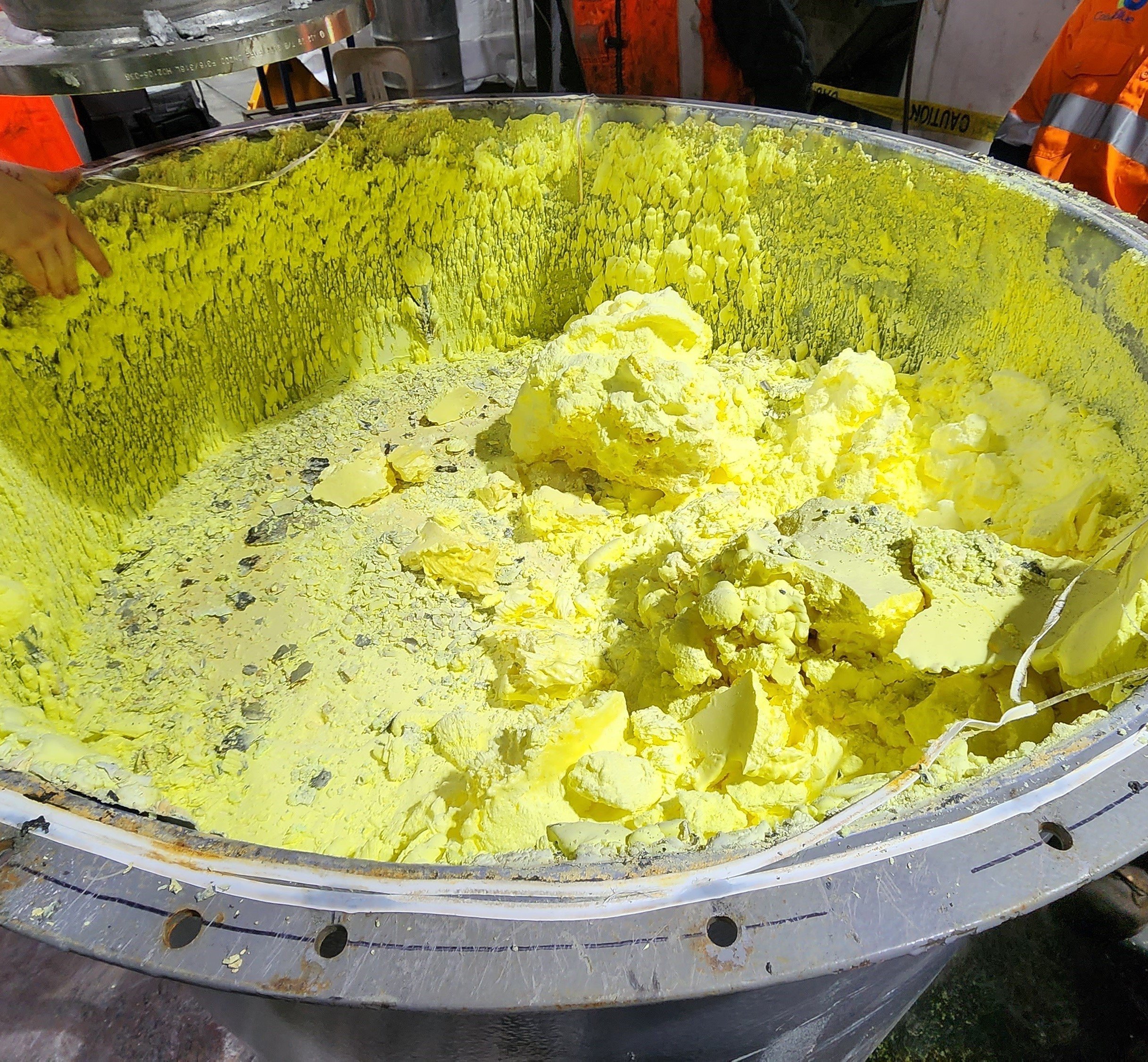
BHCP Byproduct: Sulphur in condensation tank at the Broken Hill Technology Centre
A By-Product Worth Watching
BHCP has always been a cobalt story. That hasn't changed. But the evolving sulphur market is a reminder that projects with diversified commodity exposure — even where one product dominates — carry optionality that can be easy to overlook.
As we continue to advance BHCP, sulphur is a value stream we're increasingly focused on. We think investors should be too.
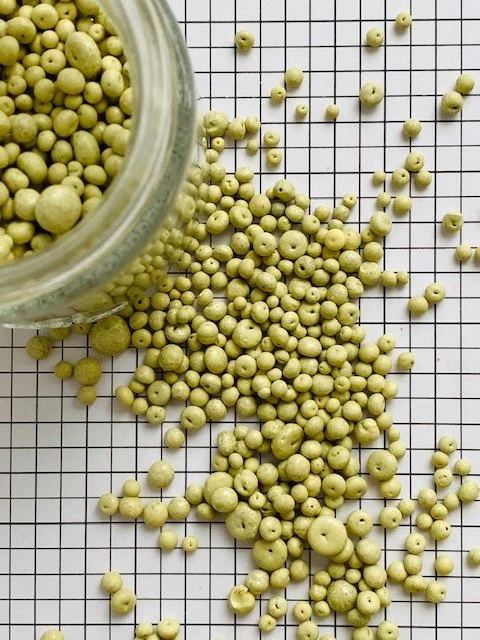
Elemental sulphur prills produced from BHCP