
For the second time since February 2025, the Democratic Republic of Congo (DRC) has suspended all cobalt exports.
Cobalt Blue is building an Australian supply chain, free from sovereign risk.
The ban takes effect November 30, with a review planned within four months as ARECOMS, the country's minerals regulator, revisits the quota framework it introduced in October 2025. For historical perspective on the DRC’s policy evolution, go to page 10 of our Cobalt 101 guide.
The trigger is price. Cobalt crossed below $20/lb ($44,000/t) for the first time since October 2025 and hydroxide lost close to half its value from an April 2026 peak. A suspension of this scale will almost certainly push prices back up in the near term.
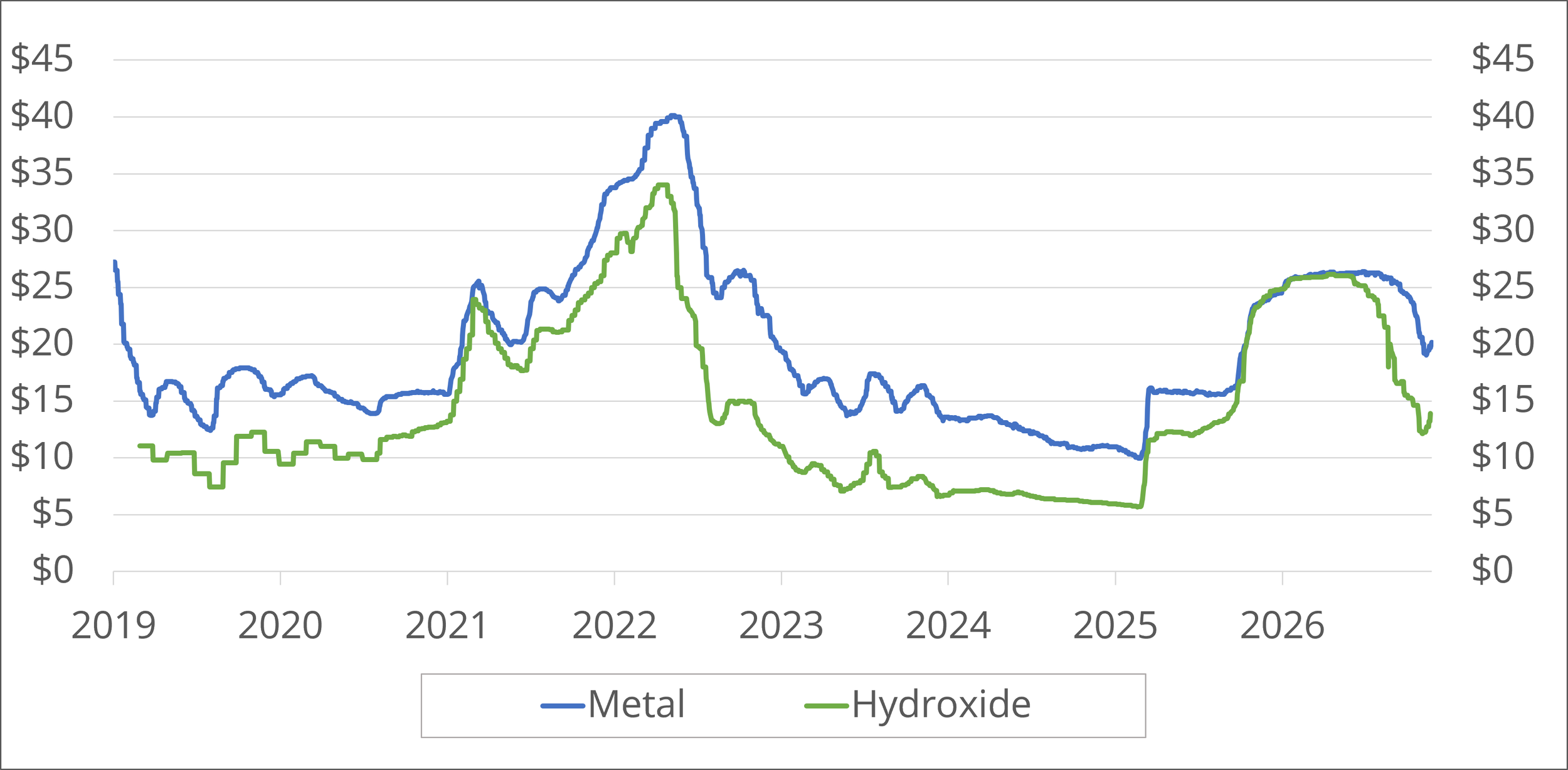
Source: Fastmarkets, Cobalt Blue Holdings
Seeking Supply Discipline
The deeper issue is supply discipline. The quota system created a significant mismatch between production and sales. CMOC, the largest cobalt miner, produced close to 100,000 tonnes in the DRC in the first nine months of 2026 but sold fewer than 13,000 tonnes, a 75% collapse in sales while production grew around 10%. That divergence is a primary source of the inventory build ARECOMS has cited. The ban is a signal to producers that the DRC expects actual curtailment, not just paper compliance with an export ceiling. Glencore has already moved in that direction, publicly keeping cobalt in solution rather than processing it into saleable hydroxide.
Indonesia is adding a second layer of supply pressure. The government cut its 2026 nickel ore extraction quota by roughly a third (cobalt is a byproduct), with officials signalling further cuts in 2027. A May 2026 presidential decree also requires all strategic mineral exports, including nickel and cobalt, to be routed through state-owned enterprises. Indonesia supplies close to 60% of global nickel, and a material share feeds cobalt-bearing mixed hydroxide precipitate.
The result: buyers now face sovereign policy risk on two of the three major cobalt supply chains at the same time.
Demand is not the problem
NMC battery growth in EVs, consumer electronics, drones, and humanoid robotics continues to build. DRC production capacity has simply grown beyond what the market currently requires. As long as supply growth stays flat, demand will catch up.
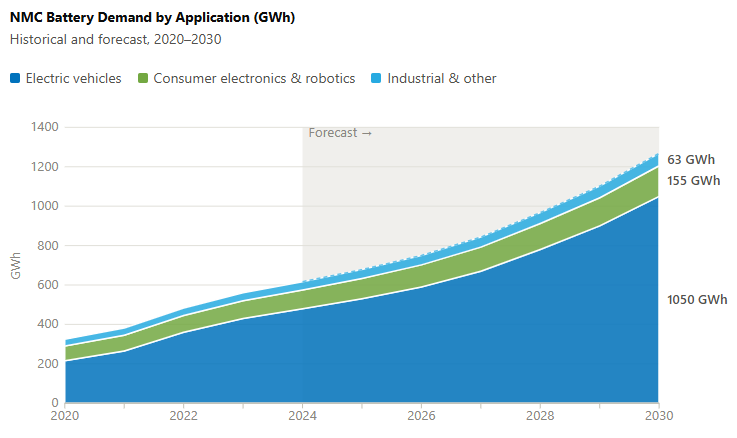
Source: IEA Global EV Outlook, Cobalt Blue Holdings
Cobalt Blue's Position
Battery manufacturers, automakers, and governments cannot plan around a supply chain subject to repeated policy-driven shutdowns. The need for geographically diversified, stable, sovereign cobalt supply is a commercial reality, not a talking point.
The Broken Hill Cobalt Project hosts one of the largest cobalt deposits outside the DRC, in a stable Australian jurisdiction with transparent regulation and direct access to Asian and Western markets. The Kwinana Cobalt Refinery will process cobalt intermediates from multiple feedstock origins into battery-grade cobalt sulphate and high-purity cobalt metal, a refining capability that does not currently exist in Australia.
Together, they represent an integrated, mine-to-refinery supply chain on Australian soil, sovereign, reliable, and built for manufacturers and governments who can no longer afford a single point of failure.
The DRC ban will likely achieve its short-term price objectives. But it also shows, once again, why the world needs supply chains that don't depend on it.