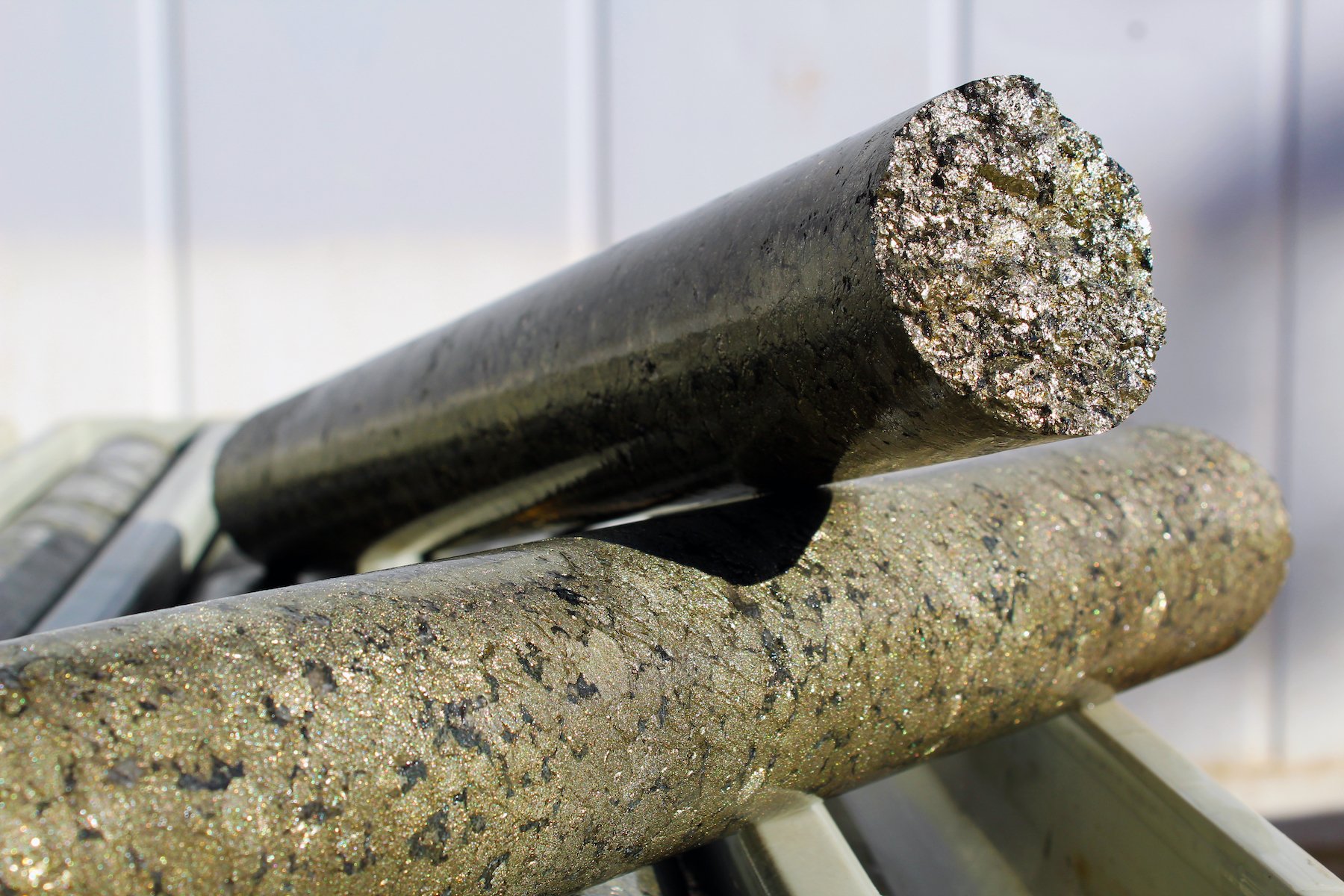
The Broken Hill Cobalt Project is located in a deformed and metamorphosed Proterozoic supracrustal rock succession named the ‘Willyama Supergroup’, which was deposited between ~1720 and ~1640 million years ago. It hosts most metalliferous occurrences, including the giant Broken Hill Pb-Zn-Ag (lead, zinc, silver) orebody.
The deposits are characterised by moderate to steep dipping stratabound zones of disseminated to semi-massive cobaltiferous pyrite mineralisation. This forms 3 distinct bodies known as Pyrite Hill, Big Hill, and Railway.
The deposits extend over some 5 km of strike and vary in thickness from 10 to 300m. The cobalt occurs exclusively as a substitute within the pyrite crystal lattice, and consequently, there is a strong correlation between pyrite content and cobalt grade.
A unique mineralogical composition distinguishes the Broken Hill Cobalt Project deposits from the Nickel - Cobalt laterite, Nickel - Copper (Cobalt - PGE), and Copper - Cobalt sulphide deposits, which account for some 98% of global cobalt production.